
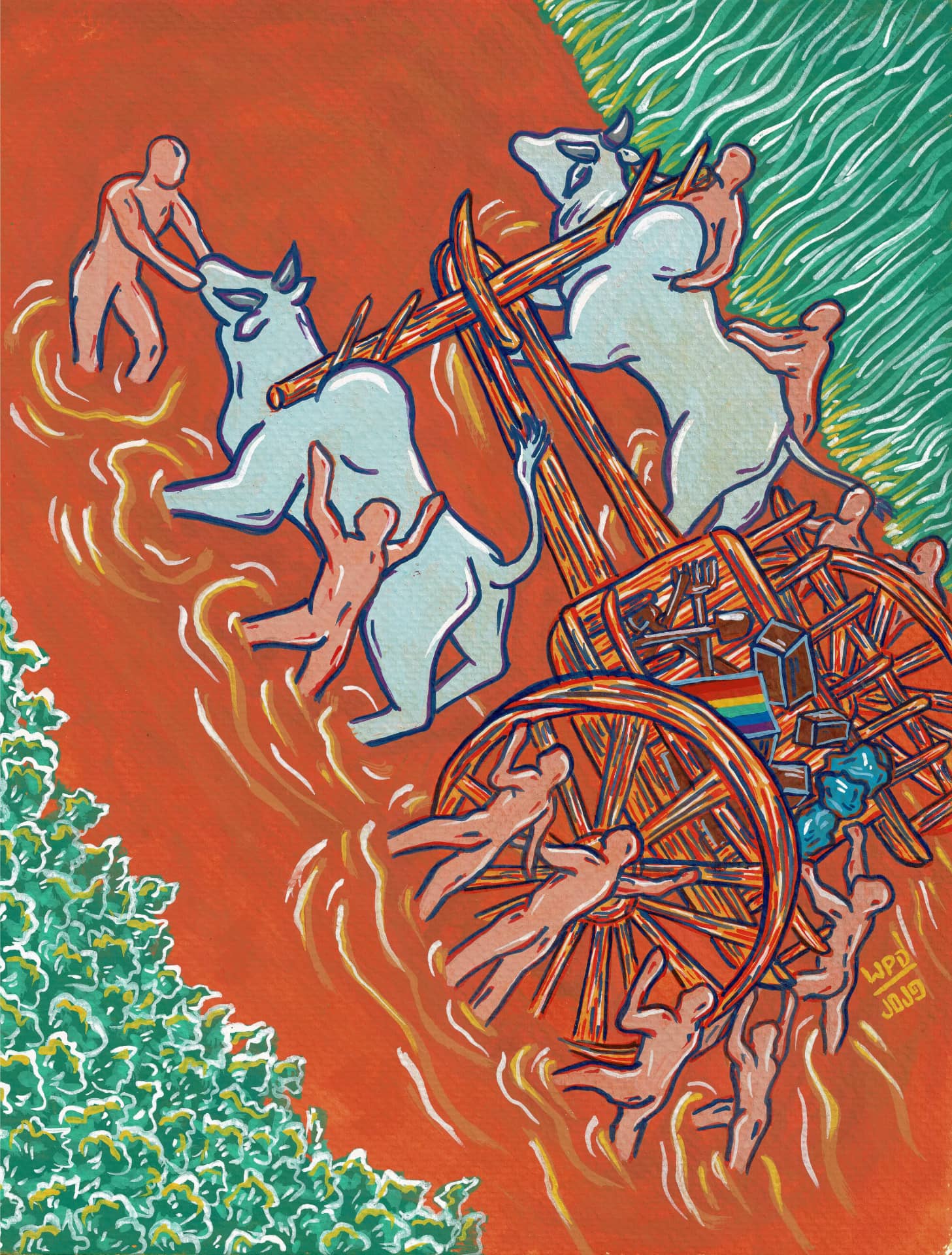
IG: @wetpaint_dreams
This Human Rights Day arrives at a pivotal moment for Southeast Asia, as ASEAN adopts the Declaration on the Right to a Safe, Clean, Healthy, and Sustainable Environment, an instrument intended to strengthen regional responses to the climate crisis, environmental degradation, and shrinking civic space. The Declaration affirms that environmental harms disproportionately impact women, young people, persons with disabilities, Indigenous peoples, and other vulnerable sectors. It also emphasises the importance of public participation, access to information, environmental education, and protection for those defending environmental rights.
Yet, despite its broad ambition, the Declaration remains incomplete. A crucial gap persists: it does not recognise LGBTQIAN+ persons and SOGIESC communities as groups in vulnerable situations. In ASEAN policymaking practice, silence has consequences; what is not explicitly mentioned is rarely integrated into protection mechanisms or operational plans. As a result, queer communities, who often face heightened risks at the intersections of environmental injustice, digital repression, and gender-based violence, remain unacknowledged within the region’s environmental governance framework.
SOGIESC Invisibility and the Need for Intersectional Protection
The invisibility of LGBTQIAN+ communities in ASEAN’s environmental Declaration reflects a broader pattern of structural exclusion. Across the region, queer environmental and human rights defenders operate under conditions shaped by stigma, moral regulation, criminalisation, and political hostility.
FORUM-ASIA’s documentation of over 1,134 cases of violations against human rights defenders shows that LGBTIQ individuals remain among the most targeted, facing harassment, doxxing, arbitrary arrests, and physical or digital intimidation. Their involvement in land rights protests, anti-extraction campaigns, forest and biodiversity protection, or digital freedom advocacy frequently places them at risk of exposure or retaliation from both state and non-state actors. However, the current Declaration does not provide a framework for addressing these layered vulnerabilities. While it mentions the need to protect environmental defenders, it does not consider how risk multiplies when identity, sexuality, and socio-political marginalisation intersect.
Moreover, meaningful participation, one of the Declaration’s central commitments, remains unattainable for many queer communities who fear being outed, surveilled, or discriminated against if they participate in public consultations. The absence of SOGIESC-sensitive processes means that queer activists may continue to self-exclude, not because they lack expertise or interest, but because the structures designed to include the public are not built to keep them safe.
Digital insecurity compounds these risks. Environmental movements in Southeast Asia rely heavily on online organising, yet queer defenders routinely encounter cyberharassment, threats, and data breaches that directly undermine their ability to advocate. The Declaration’s silence on digital protections creates a blind spot in an era when environmental advocacy is inseparable from digital rights. Without explicit recognition, guidance, and safeguards, queer communities remain structurally vulnerable, and environmental protection frameworks fail to uphold the universality of human rights.
The Impact of Disinformation and Greenwashing on Climate Advocacy
In addition to the direct risks faced by queer environmental defenders, the broader issue of disinformation further clouds the fight for climate justice. In Southeast Asia, massive digital disinformation campaigns are increasingly undermining public understanding of climate science and the urgency of environmental protection. These campaigns often come from political groups or corporate interests seeking to downplay the severity of environmental degradation, mislead the public, and obstruct meaningful climate action. Disinformation not only misguides public opinion but also limits access to accurate, life-saving information about the state of the environment.
Compounding this problem is the pervasive issue of corporate-led greenwashing. Many corporations, seeking to improve their public image without implementing substantial environmental reforms, launch misleading marketing campaigns that portray them as environmentally responsible, despite their actual practices contributing to the crisis. This greenwashing distorts the true environmental impact of corporate activities and creates a false sense of progress, further delaying the systemic solutions needed to address climate change.
This phenomenon has a direct impact on public policy and environmental activism. By flooding the information space with misleading narratives and false promises, corporate disinformation and greenwashing obscure the real need for systemic change and accountability. For queer environmental defenders, navigating this disinformation landscape is particularly difficult, as it detracts from the urgent need for climate justice and impedes access to valuable resources, support, and policy advocacy.
Towards a Regional Plan of Action that Integrates Queer Justice into Environmental Governance
The mandate for AICHR to develop a Regional Plan of Action (RPA) presents a critical opportunity to close these gaps and build an inclusive environmental rights framework. The Regional Strategic Convening held in Jakarta in November 2025 underscored the urgency for ASEAN to engage civil society meaningfully, particularly those representing communities most affected by shrinking civic space and environmental conflicts.
For queer communities, inclusion must go beyond symbolic recognition; it requires explicit naming as a vulnerable group, meaningful access to consultation spaces designed to protect confidentiality and safety, and tailored protection for those facing digital and physical threats as environmental defenders. It also requires embedding SOGIESC considerations across monitoring, evaluation, and resource allocation systems so that inclusion is not discretionary but systemic.
An RPA informed by queer perspectives will not only correct structural omissions but also strengthen environmental governance as a whole. Queer communities across Southeast Asia have long played roles in grassroots organising, disaster response, climate resilience initiatives, and community-led sustainability work. Their leadership and lived experiences offer insights into how environmental harm intersects with social exclusion and how resilience is built through chosen families, mutual support networks, and adaptive community structures.
Integrating queer justice into ASEAN’s environmental agenda ensures that policies reflect the complexities of real human experiences rather than narrow demographic categories. This approach moves ASEAN closer to its stated vision of a resilient, people-centred region.
Environmental Rights Must Protect All, Including Queer Communities
As we commemorate Human Rights Day, it becomes clear that environmental rights cannot be genuinely universal if entire communities remain absent from regional policy language. Queer communities in Southeast Asia are not only disproportionately affected by environmental harms but are also essential actors in environmental defence and climate justice movements.
Their exclusion from the ASEAN Declaration undermines the very purpose of the instrument, to create conditions in which all people can enjoy a safe, clean, healthy, and sustainable environment. The path forward requires ASEAN to recognise, include, and protect LGBTQIAN+ communities explicitly. Environmental justice and queer justice are intertwined, and both must stand at the centre of ASEAN’s human rights commitments. A future where environmental rights are realised for everyone is only possible when queer lives and contributions are fully acknowledged and safeguarded.