ASEAN SOGIE Caucus
Inclusive and diverse ASEAN

ASEAN SOGIE Caucus
Inclusive and diverse ASEAN
Inclusive and diverse ASEAN
Inclusive and diverse ASEAN
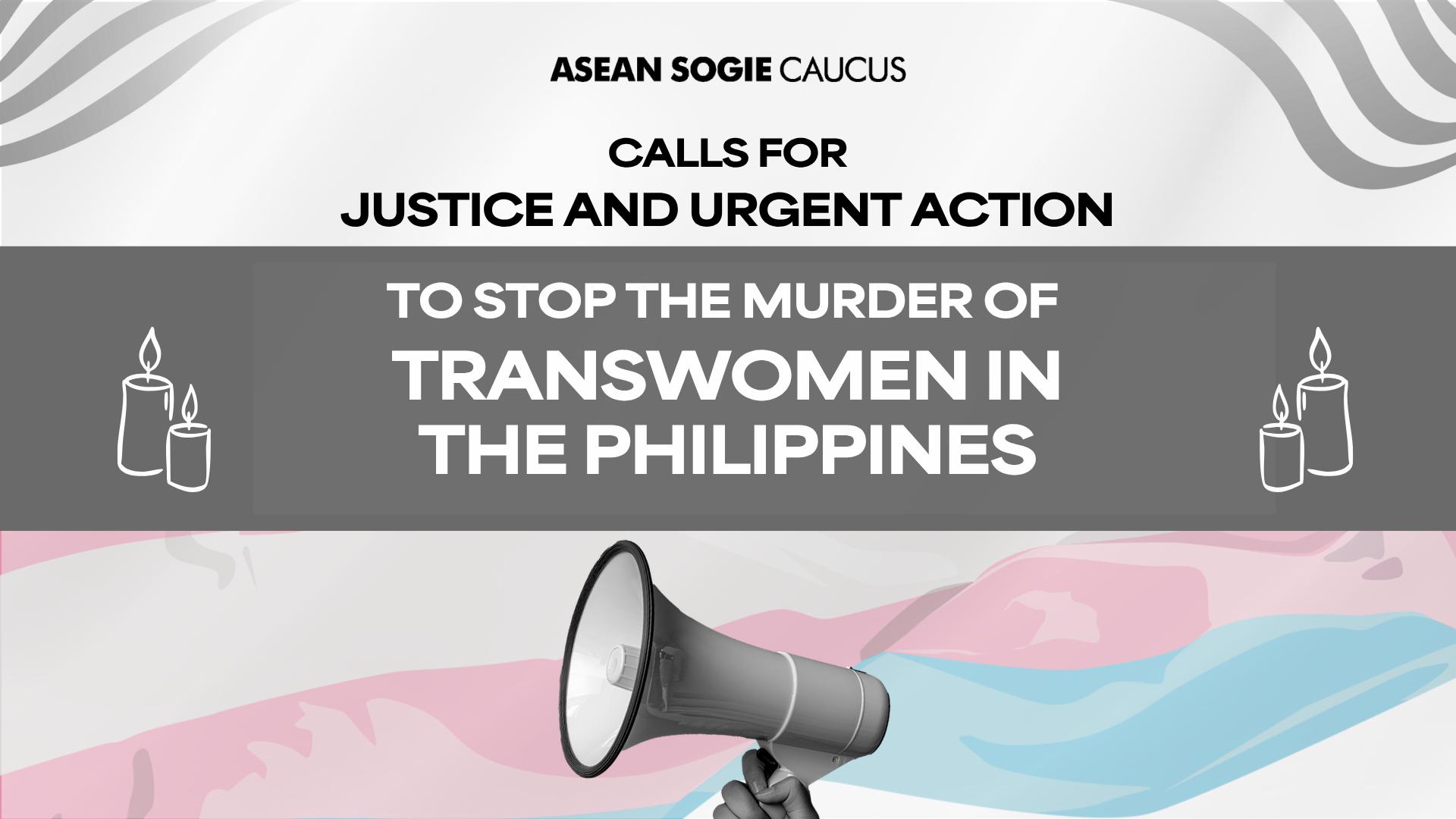
The ASEAN SOGIE Caucus is deeply alarmed by the recent deaths of transpinay people in the Philippines. We mourn the loss of Betty Benito, Teddy S. Federico, and Jang Caes Macawili, and extend our deepest condolences to their families, friends, loved ones, and communities.
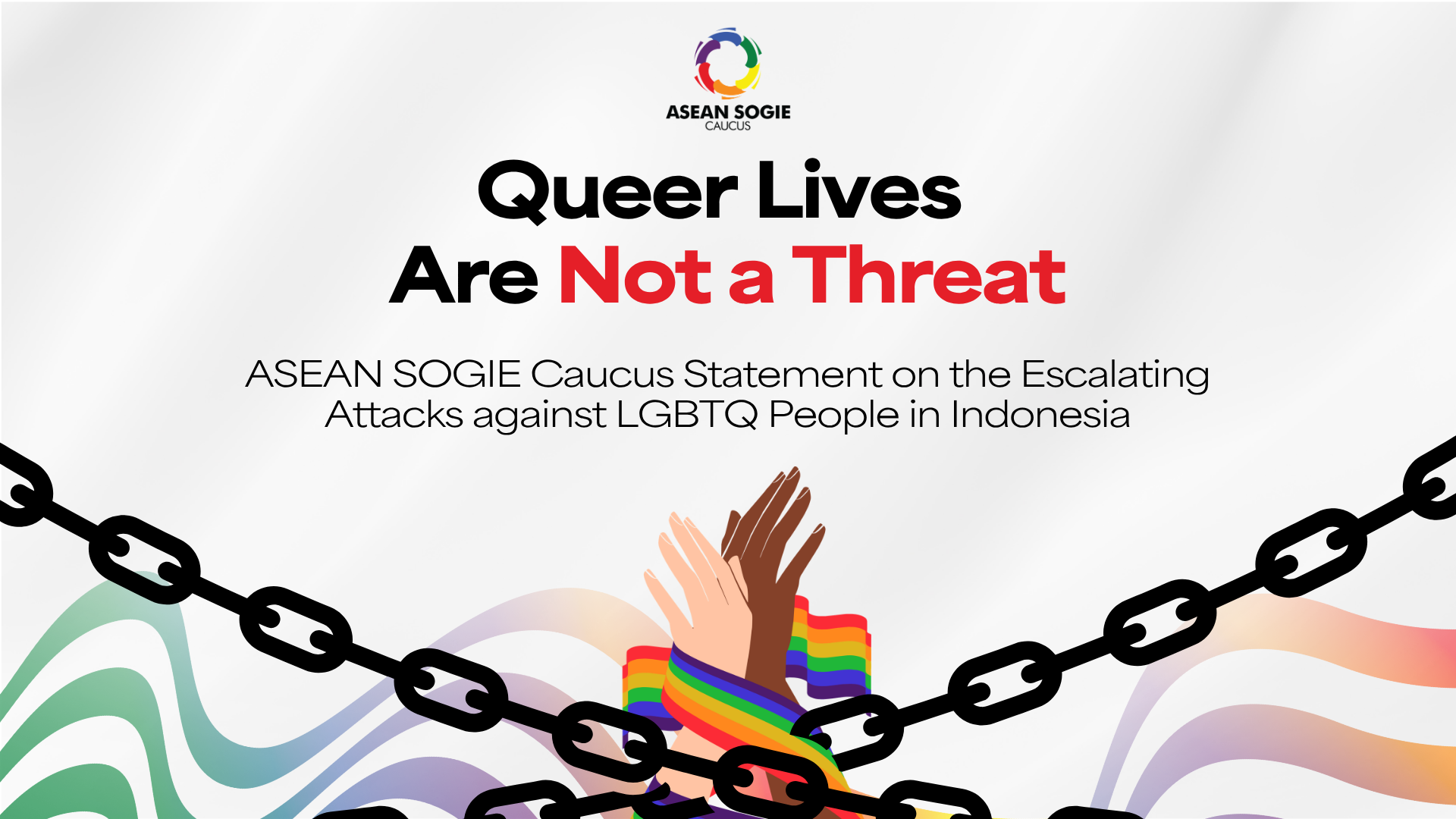
ASEAN SOGIE Caucus is raising an urgent alarm to queer communities, civil society organisations, human rights defenders, and allies across Southeast Asia and beyond regarding the escalating attacks against LGBTQ people in Indonesia.
Indonesia was a co-sponsor of The Geneva Consensus Declaration 2020, a conservative document opposing reproductive rights and LGBTQ rights. This declaration, driven by the conservative authoritarian regime of the United States under the Trump administration, has been effectively reflected in Indonesia’s regulations. President Prabowo Subianto now frames the dissemination of LGBTQ culture as a non-military threat in their 2026-2029 National Security Defense strategy, as outlined in Presidential Regulation No.111 2025. This regulation now serves as a legitimate basis for persecuting LGBTQ individuals, especially trans women, non-binary people, and those with gender-nonconforming identities.
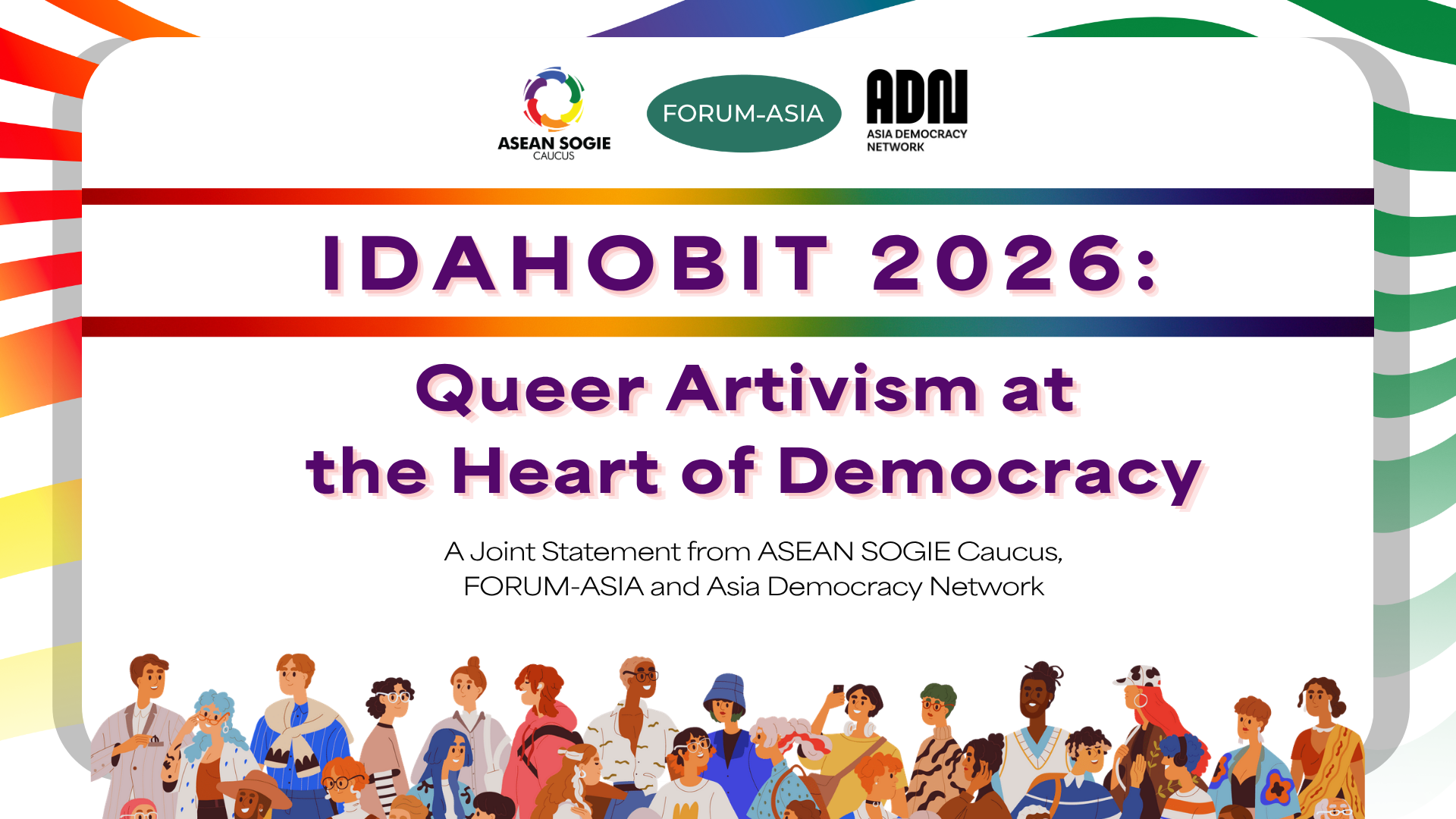
A Joint Statement from ASEAN SOGIE Caucus, FORUM-ASIA and Asia Democracy Network
The International Day Against Homophobia, Biphobia, Interphobia, and Transphobia is a moment to reaffirm a truth that should never be contested: LGBTQIAN+ rights are human rights. Yet across Southeast Asia, LGBTQIAN+ persons continue to live under conditions shaped by criminalization, stigma, censorship, shrinking civic space, and policies that seek to erase queer and gender-divers lives from public visibility.
A Statement from ASEAN SOGIE Caucus
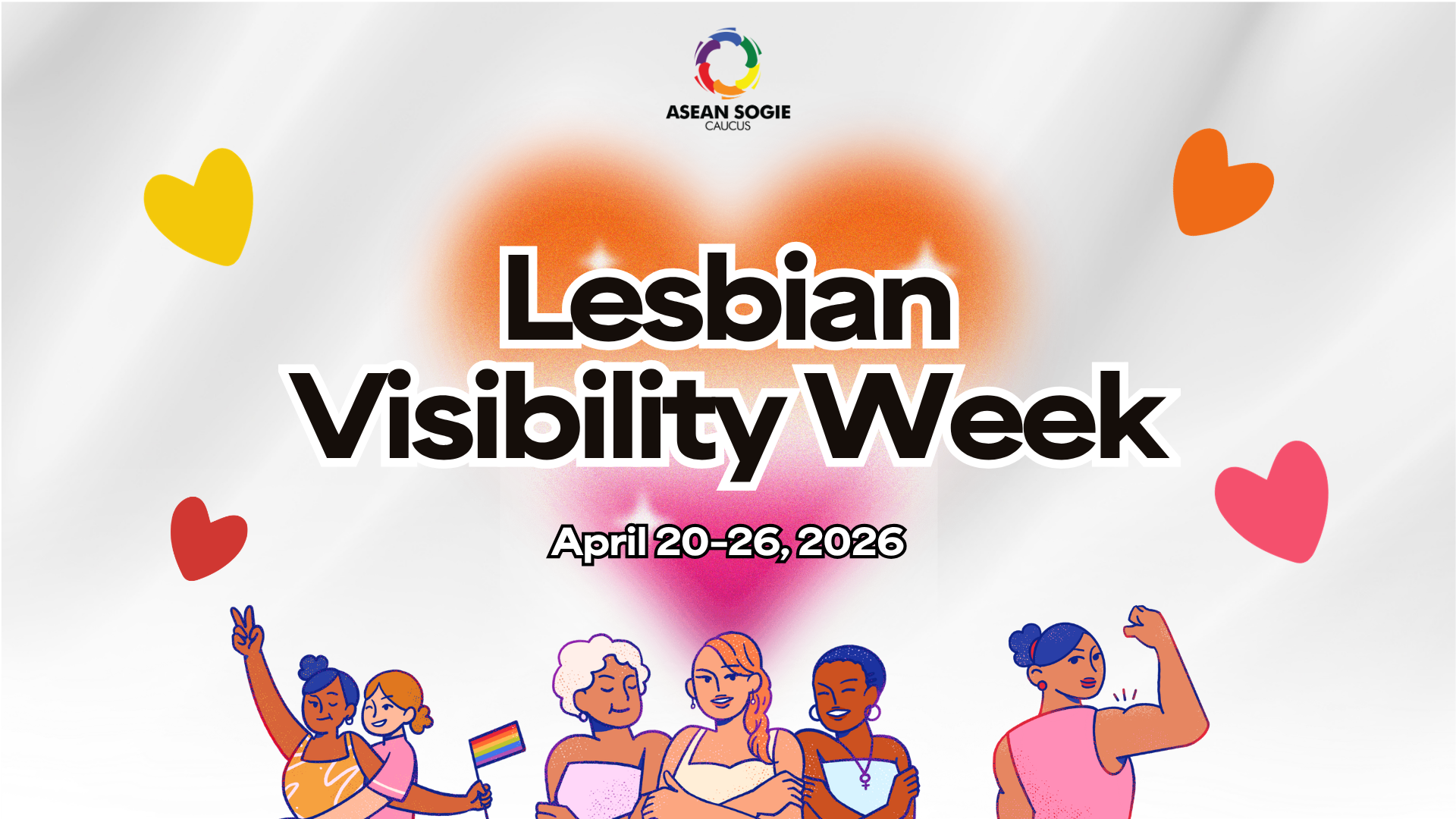
Lesbian Visibility Week is often understood as a moment to recognize and affirm lesbian identities. Yet, in Southeast Asia today, where communities are facing multiple crises–from armed conflict such as the Myanmar civil war, environmental-related disasters in Indonesia and Philippines, economic precarity, and shrinking civic space all across the region–visibility cannot be reduced to recognition alone. In this context, visibility is not only about being seen, but about how we show up for one another, through solidarity, collective care, and shared resistance in times of crises. Lesbians across broader sector of communities are sustaining their own network of care, organizing mutual aid, forming chosen families where formal systems fall short.
International Women’s Day Is Not Only a Celebration, It Is a Reminder of the Ongoing Struggle
From the era of colonial domination to the present day, its legacies continue to shape gender and sexual diversity across Southeast Asia. Colonial rule imposed rigid gender binaries and heteronormative systems that erased the rich, diverse, and often more egalitarian gender practices that existed in many Southeast Asian societies long before colonisation. Historically, we recognize gender-diverse and spiritually significant roles such as the babaylan in the Philippines and the bissu in South Sulawesi, Indonesia, who embody sacred forms of gender plurality within their communities.

The ASEAN SOGIE Caucus (ASC) warmly welcomes the landmark ruling of the Philippine Supreme Court Decision — G.R. No. 267469, recognising that same-sex couples who live together may be acknowledged as co-owners of property under Article 148 of the Family Code, through judicial interpretation, where there is proof of actual contribution. This ruling is a progressive and important step in protecting the right to housing and property for all persons, regardless of sexual orientation or gender identity.
Inclusive and diverse ASEAN
Legally Registered in the Philippines as Southeast Asia Sexual Orientation,
Gender Identity and Expression Caucus (ASC), Inc. The organization is in
Special Consultative Status with the UN ECOSOC since 2021.
Quezon City, Philippines
Email: communications@aseansogiecaucus.org
ASEAN SOGIE Caucus © 2026