
By Riska Carolina
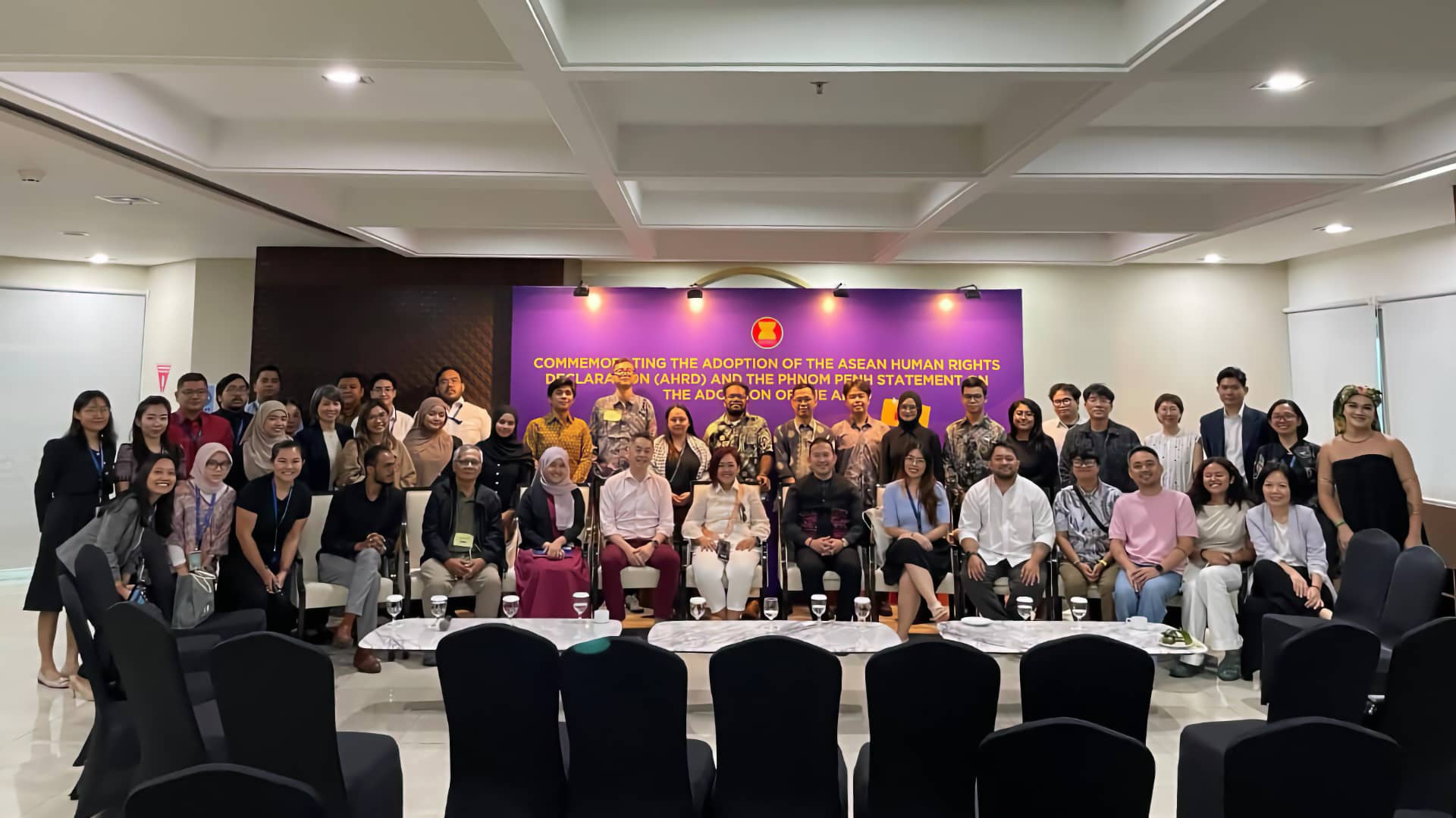
At the event “Commemorating the Adoption of the ASEAN Human Rights Declaration and the Phnom Penh Statement on the Adoption of the AHRD,” in Jakarta, November 18, 2025, a thoughtful question emerged: How can AICHR engage more meaningfully with SOGIESC communities in the future, so their lived realities and protection needs are better understood?
Rather than creating tension, the question opened a genuine space for reflection, one that revealed a region slowly learning, unlearning, and negotiating what human dignity means in a changing Southeast Asia.
Edmund Bon, AICHR Chair and Malaysian Representative responded by emphasizing that the AHRD already carries a broad commitment to protect everyone and of non-discrimination. Articles 2 to 4 guarantee that everyone is entitled to human rights without distinction of any kind and the right of recognition and equal protection of the law.
“Human rights in the AHRD are like a prism,” he said,
His point was clear: while the Declaration may not explicitly list every group, its spirit is rooted in universality and equal protection of the law, particularly groups in marginalised situations. Everyone including LGBTQIAN+ people are not outside the framework, they are already part of it.
Representatives from Timor-Leste offered a grounded and honest perspective.
“They are human beings. They are part of the community.”
He acknowledged that some resistance comes from longstanding cultural norms that define rigid gender roles. But he also recognized that LGBTQIAN+ individuals contribute skills, creativity, and leadership. His message was simple: with more openness and education, communities can evolve.
Anita Wahid of AICHR Representative from Indonesia then shared a deeply personal reflection. She admitted she once struggled to understand gender diversity until she met an intersex person whose life did not fit neatly into binary categories.
“It’s unfair for me to judge what gender someone should be,” she reflected. “I am not in their struggle”.
Her openness illustrated something hopeful: real understanding often begins with human connection. She also noted that while not all Southeast Asian communities may be ready today, conversations and visibility are creating steady shifts.
“We cannot stop the world. We need to keep talking, so society becomes used to your presence
Together, the interventions from Edmund Bon, Anita Wahid and representatives from Timor Lester paint a picture of a region in motion, not divided, but learning. Bon affirms a universal human rights foundation that, in his view, already protects everyone. Belo acknowledges the cultural realities that shape public attitudes, yet approaches them with empathy and a belief in gradual openness. Wahid demonstrates how personal encounters can transform understanding and soften long-held assumptions. Through these three perspectives, Southeast Asia reveals itself as a region navigating complexity with sincerity, moving steadily, if unevenly, toward greater recognition and inclusion.
This combination of universal principles, cultural sensitivity, and personal growth is precisely the kind of conversation ASEAN needs as it prepares for the next chapter of human rights protection.
The question of engaging SOGIESC communities is not only about policy, it is about co-creating a culture of understanding, allyship and solidarity, much needed principles to counter an ongoing attack towards human rights and democracy. The willingness of representatives to speak openly, even when navigating complex cultural terrain, shows that change is not only possible, it is already happening.
As ASEAN reflects on more than a decade since the AHRD’s adoption, there is an opportunity to move forward with a spirit that is both inclusive and grounded in local realities. Naming communities, understanding their experiences, and engaging them directly will only strengthen ASEAN’s commitment to a people-centered future.