For many lesbian individuals and communities, visibility has never been a simple or safe choice. It exists within conditions shaped by capitalism, colonial legacies, heterocitizenship narratives, and religious conservatism that positions non-conforming identities as morally deviant. In several Southeast Asian countries, including Malaysia, Myanmar, and Brunei, consensual same-sex relations remain criminalized under legal frameworks largely derived from colonial-era provisions and reinforced by contemporary political and religious dynamics. These conditions are compounded by structural inequalities that limit access to protection, healthcare, employment and justice.
In a time of deepening crises, Lesbian Visibility must move beyond narrow identity recognition toward a lived politics of solidarity—something lesbian communities across the region have long been practicing. It is reflected in how we resist exclusion by showing up for one another, by building our own systems of care, and by insisting that no struggle exists in isolation. Across humanitarian, social, and political spaces, lesbian and queer communities continue to assert our place—not only as those affected by crisis, but as active agents shaping responses, sustaining communities, and holding the line against injustice.
This moment calls on all of us—across movements and communities—to deepen solidarity in practice. It asks us to recognize that struggles for justice, peace, and sustainability are deeply interconnected, and that collective liberation depends on our ability to move together, to support one another, and to challenge the structures that divide and exclude.
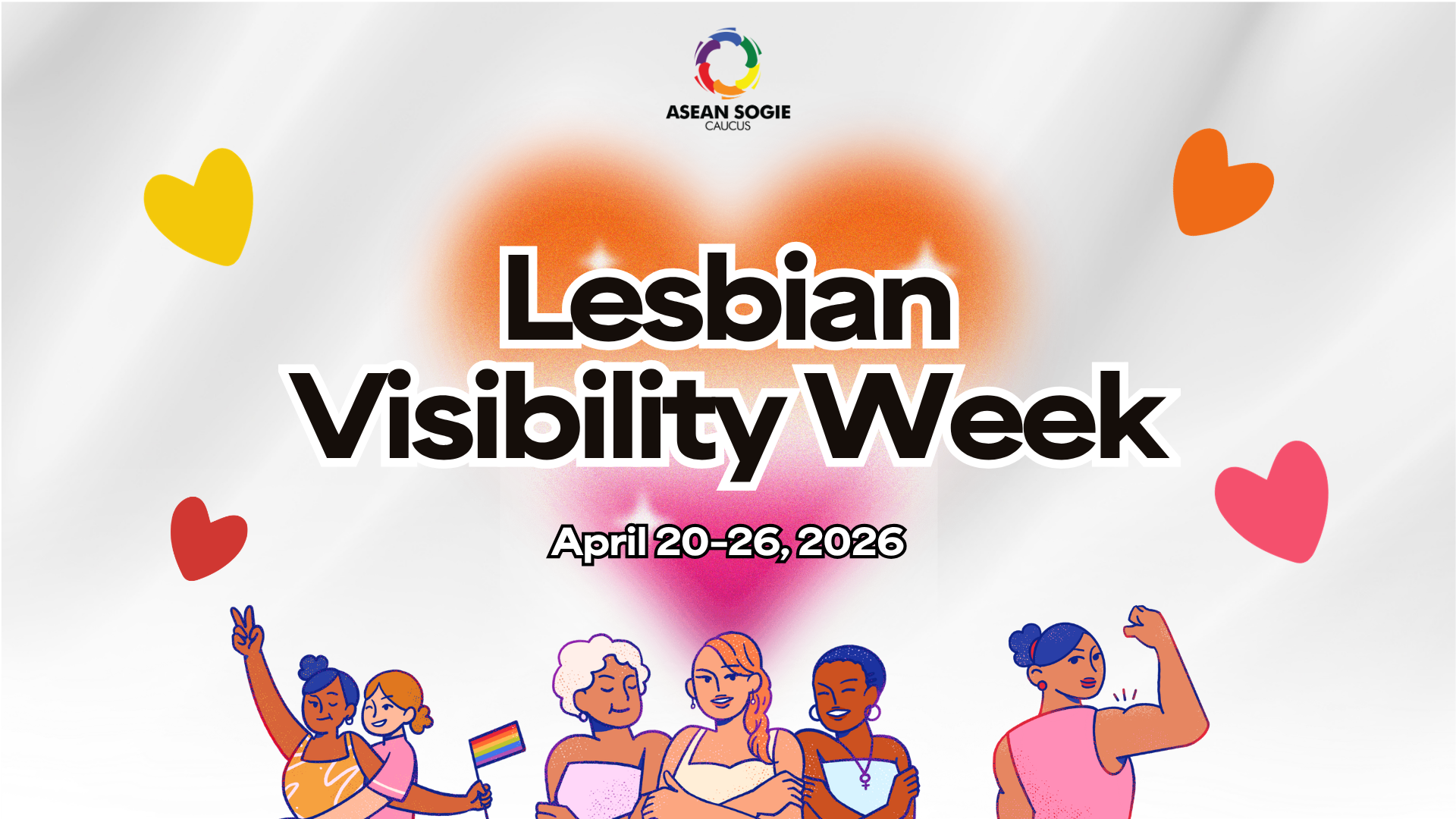
For the ASEAN SOGIE Caucus, Lesbian Visibility Week is a moment to reaffirm that dignity and justice must be rooted in intersectionality and collective care. It is a recognition of lesbian leadership not only within LGBTQIA+ spaces, but as part of broader, shared efforts to build more inclusive, peaceful, and resilient societies. In times of crisis, visibility is not only about presence—it is about solidarity, and the ongoing, collective work of shaping a future where no one is left behind.